
It’s a simple question — and one that’s often misunderstood.
So what does a real estate agent actually do?
Most people think the answer is:
“Show houses.”
“Put a sign in the yard.”
“Handle paperwork.”
But that barely scratches the surface.
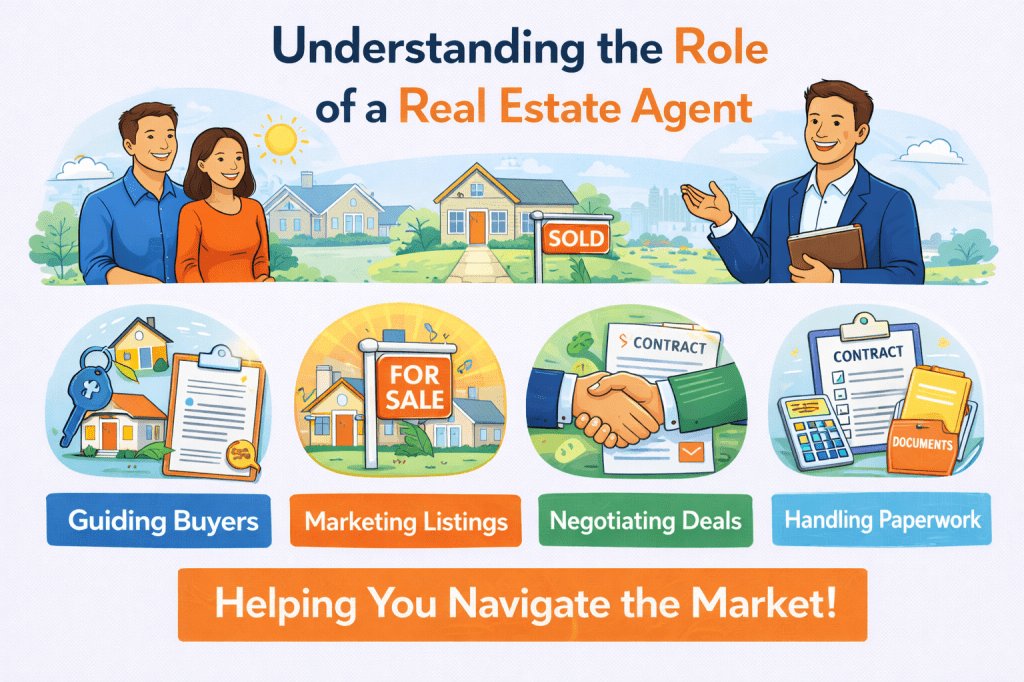
A professional real estate agent does far more than open doors or upload listings. The real value lies in strategy, protection, negotiation, and guidance — especially in competitive or shifting markets.
Let’s break it down clearly.
What Does a Real Estate Agent Do for Buyers?
For buyers, a real estate agent acts as an advisor, advocate, and market interpreter.
A strong buyer’s agent will:
- Analyze local market data to determine fair value
- Identify homes that align with both lifestyle and budget
- Structure competitive offers
- Negotiate price, repairs, and terms
- Coordinate inspections, appraisals, and deadlines
- Protect you from costly contract mistakes
Buying a home isn’t just emotional — it’s financial. The right agent helps you make confident decisions backed by data, not pressure.
What Does a Real Estate Agent Do for Sellers?
For sellers, the role becomes even more strategic.
A listing agent will:
- Conduct a detailed comparative market analysis (CMA)
- Develop a pricing strategy based on real-time trends
- Advise on preparation and staging to attract buyers
- Market the property both online and locally
- Screen offers and negotiate favorable terms
- Manage timelines to ensure a smooth closing
In today’s market, pricing and positioning matter more than ever. The difference between guessing and strategizing can mean thousands of dollars.
The Role Most People Don’t See
Beyond the visible tasks, a real estate agent manages risk.
Contracts, disclosures, financing contingencies, appraisal gaps, inspection negotiations — these details can quietly derail a transaction if mishandled.
A knowledgeable agent anticipates problems before they happen.
That’s the difference between a transaction and true representation.
Why Experience and Local Knowledge Matter
Real estate is hyper-local. Market conditions vary by neighborhood, school district, and even price range.
Understanding:
- Current inventory levels
- Days on market
- Buyer demand
- Pricing trends
…is what allows an agent to guide intelligently rather than react emotionally.
Whether you’re buying or selling in Central Texas or Frisco, informed strategy beats assumption every time.
Final Thoughts: It’s Not About Access — It’s About Guidance
Anyone can search listings online.
But clarity, negotiation skill, market interpretation, and steady guidance? That’s where the real value lives.
So what does a real estate agent do?
The best ones don’t just facilitate transactions.
They help you make informed, confident decisions — and protect your interests from start to finish.
Less confusion. Better outcomes.
 The Texas Home Playbook Smart Strategies for Buying, Selling & Winning in Texas Real Estate
Leave a comment