
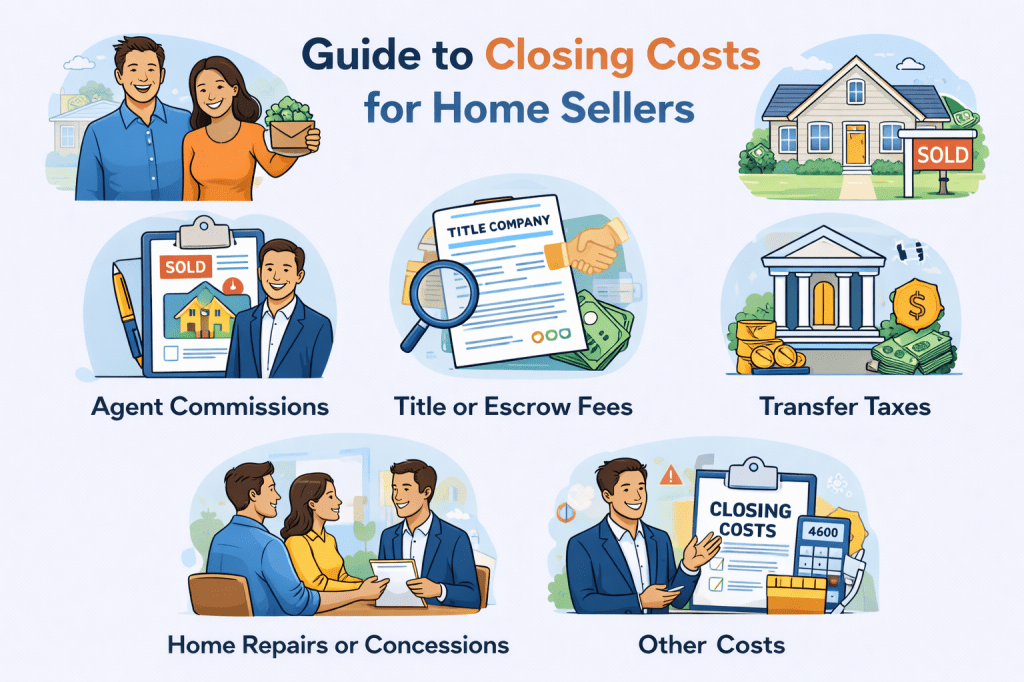
When you sell a home, it’s important to factor in closing costs, which are various fees and expenses required to finalize the transaction. Sellers typically pay between 6% and 10% of the home’s sale price in total closing costs, though some sources specify 8% to 10%. This percentage includes real estate agent commissions, which usually make up the largest portion of these expenses. For example, on a home valued at $362,000, seller closing costs could range from approximately $29,000 to $36,000. These costs are generally deducted from your sale proceeds at closing, meaning the money often doesn’t hit your bank account before these fees are paid.
Here’s a breakdown of the common closing costs for sellers:
- Real Estate Agent Commission – This is usually the biggest expense for sellers, historically ranging from 3% to 6% (or 5% to 6%) of the sale price. While sellers traditionally paid both their listing agent’s commission and the buyer’s agent’s commission, recent industry changes mean that how buyer’s agent commissions are paid is now more negotiable and varies by deal.
- Transfer Taxes – Also known as deed taxes, these are government fees charged when ownership of the property changes hands. The cost can vary significantly by state, county, or city.
- Title Insurance – Sellers often pay for the owner’s title insurance policy, which protects the buyer from any future claims against the property’s title. This can be around 0.5% of the sale price.
- Escrow and Closing Fees – These cover the services of the escrow or settlement company that manages the closing process. These fees can range from $500 to $2,500 and are often split between the buyer and seller.
- Prorated Property Taxes and HOA Fees – You’ll be responsible for your share of property taxes and homeowners’ association (HOA) dues up to the closing date.
- Mortgage Payoff – If you have an existing mortgage on the house, the remaining balance will be paid off at closing from the sale proceeds.
- Attorney’s Fees – In some states, an attorney is required to review closing documents, and sellers may incur these fees.
- Seller Concessions – If negotiated, you might agree to cover a portion of the buyer’s closing costs, which typically ranges from 1% to 3% of the sale price. The exact amount you pay can differ based on your location, the value of your home, and what terms are negotiated during the sale. You might be able to save on some closing costs by negotiating agent commissions or shopping around for title and escrow providers.
In summary, closing costs don’t have to be a surprise, or a source of stress. When you understand what to expect and plan ahead, selling your home becomes far more predictable and far less overwhelming. The key is having a clear strategy before you ever list, so every number makes sense and every decision works in your favor. If you’re thinking about selling and want clarity on your net proceeds before making a move, I’m always happy to walk through the details with you—no pressure, just honest guidance.
 The Texas Home Playbook Smart Strategies for Buying, Selling & Winning in Texas Real Estate
Leave a comment