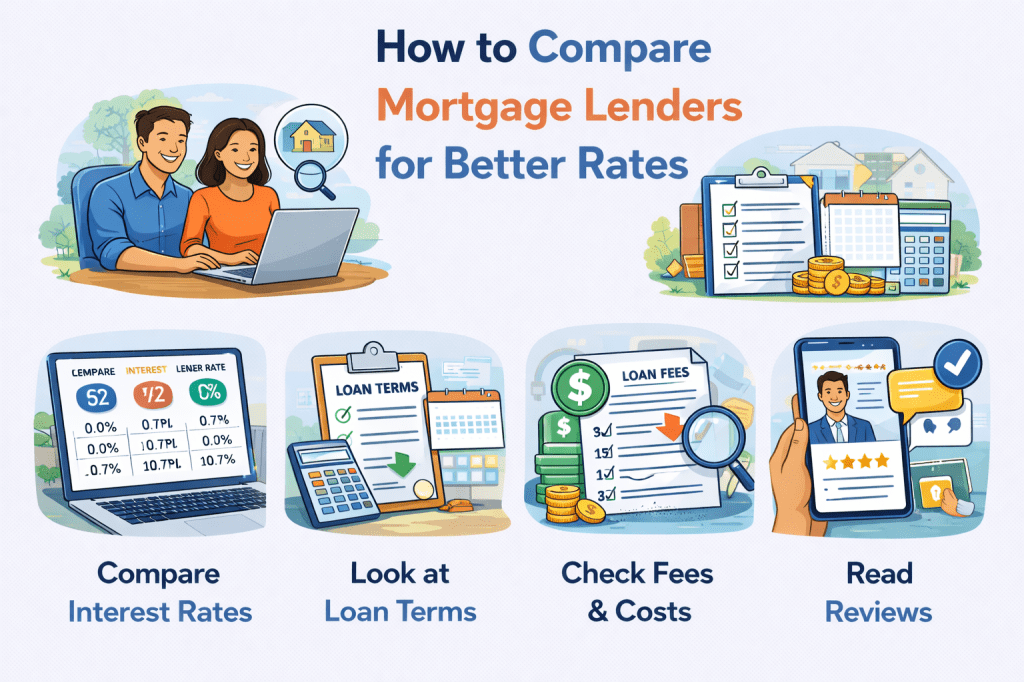
When comparing mortgage lenders for home buying, it’s important to approach the process carefully to get the best terms and save money over the life of your loan. Here’s a comprehensive guide on how to compare mortgage lenders effectively.
Determine the Right Type of Mortgage for You. Before you start comparing lenders, decide which type of mortgage fits your financial situation and goals. For example, consider whether a fixed-rate or adjustable-rate mortgage (ARM) suits your plans. Fixed-rate loans offer stable payments, good if you plan to stay long term, while ARMs might offer lower initial rates if you plan to sell or refinance within a few years. Your credit score, down payment amount, and whether you qualify for specialized loans like FHA, VA, or USDA also impact your choice.
Gather Loan Estimates from Multiple Lenders. Request Loan Estimates from at least three to five lenders. These standardized documents show important loan details, including interest rates, monthly payments, closing costs, and fees. This helps you compare the true cost of each loan offer, not just the interest rate. Pay close attention to the APR (Annual Percentage Rate), which includes interest and most fees, providing a more complete picture of cost.
Compare Interest Rates and Fees. Even a small difference in interest rates can add up to significant savings over 30 years. For example, a 0.75% difference in rates could save you thousands. But don’t focus on rates alone—compare lender fees such as origination fees, points, and closing costs. Some lenders may offer lower rates but higher fees, so look at the total cost.
Check Lender Types and Services. Different lenders have different strengths. National banks may offer convenience if you already bank with them and might have special programs or grants for first-time buyers. Regional banks, credit unions, mortgage brokers, and online lenders each have unique offerings and customer service styles. Consider what type of lender fits your preferences for service and loan products.
Verify Lender Credentials and Reputation. Research lenders’ licensing status through the National Mortgage Licensing System (NMLS) and read customer reviews to ensure they are reputable and trustworthy. This reduces the risk of fraud and ensures you’re working with a legitimate lender.
Negotiate and Ask Questions. Once you have several loan estimates, don’t hesitate to negotiate terms or ask about rate locks, prepayment penalties, and other loan features. Some lenders might be willing to reduce fees or offer better terms to win your business.
Use Tools and Worksheets to Organize Offers. Use mortgage comparison worksheets or tools provided by consumer agencies like the Consumer Financial Protection Bureau (CFPB) to keep track of offers side-by-side. This helps you make an informed decision without overlooking key details.
In summary, the best way to compare mortgage lenders is to…
1) Know what mortgage type you need based on your financial situation.
2) Get loan estimates from multiple lenders to compare rates, fees, and terms.
3) Consider lender types and their service offerings.
4) Verify lender credentials and negotiate to get better deals.
5) Use tools to organize your findings for a clear decision.
Taking these steps seriously can save you thousands of dollars and ensure you choose the mortgage that best fits your needs.
 The Texas Home Playbook Smart Strategies for Buying, Selling & Winning in Texas Real Estate
Leave a comment